Mood Machine by Liz Pelly Will Change Your Life
This book should be required reading for all music streaming customers, whether or not you use Spotify. You owe it to yourself to read Pelly’s work in full.
From detailing how every click and keystroke in app is logged and analyzed (and sold to whomever wants to pay for it) to uncovering ghost musicians, Pelly’s ten+ years working on this book is extraordinary. Spotify paying and contracting musicians to make music that sounds like popular music (and paying to send them to songwriting camps) so they can program and place it more than the music of working/touring musicians so they can continue to pay them even less is emotionally despicable. When Pelly goes into detail just how much music used to be publicly funded in Sweden (its on a decline) and how pro-union Sweden workers and companies are, it is amazing to see how evil and mindless Ek and co have become since becoming the biggest part of the music market in America. When discussing this with a well-read friend of mine, this friend didn’t even know Spotify was Swedish. Reader: how did we get here? This is not my beautiful wife!!
The surveillance of our streams, clicks, and Spotify For Artists (S4A) side of the app (which I’ve never seen) made me actively put down my phone and the app the more and more I read. I joined Spotify about a decade ago when I got my first iPhone and it drastically changed how I listen to music. I used to be an album oriented only listener, now I am a playlist person. She’s right. We shouldn’t be able to pay $10 a month for access to any music we can dream of typing into a space bar, but we can. It’s so convenient but also just so bad. Bad for how musicians are making music (many are basing what they make or play next on what does or charts well on Spotify playlists), bad for users who have lost their ability to care or to crate dig, bad for us to think for ourselves. All of us! The lobbying, the indie playlists packed with major label signed artists, and my god the moods. Everything is mood based, coded or tagged as a mood to fit your mood. It’s called Mood Machine for a reason. I’ll never do it justice in this blurb. The individualization of artists used to be what drew us to the art, now it’s about us, the user, and how we listen, how we can brand ourselves, how every detail of our days is a song that will tell Spotify what to do next.
What got me the most is reading quotes from Ek who said “our biggest competitors aren’t Apple Music or Amazon Music or TIDAL, it is silence.” They just want you to use the app. That’s all it is. There are sleep playlists, audio books, podcasts: just log time on their app. They can charge more money for ads that way. They are quite literally selling your data, that you provide, to military intelligence agencies. The worst part is the whole streaming idea was built around encouraging sharing and piracy. (The history of music piracy in Sweden is fascinating.) No. The worst part is Ek started as an SEO guy. No the worst part is that Spotify doesn’t actually know how much money artists are paid because they only pay publishers and licencors of music. No the worst part is the former White House aides and employees who now work at Spotify and are on their lobbying side. No the worst part is the bits about Barak Obama’s involvement with his infamous Spotify playlists. No the worst part is they eventually want to develop the app so all you have to do is open it; you don’t even have to hit play. We are living in Wall-e (2008).
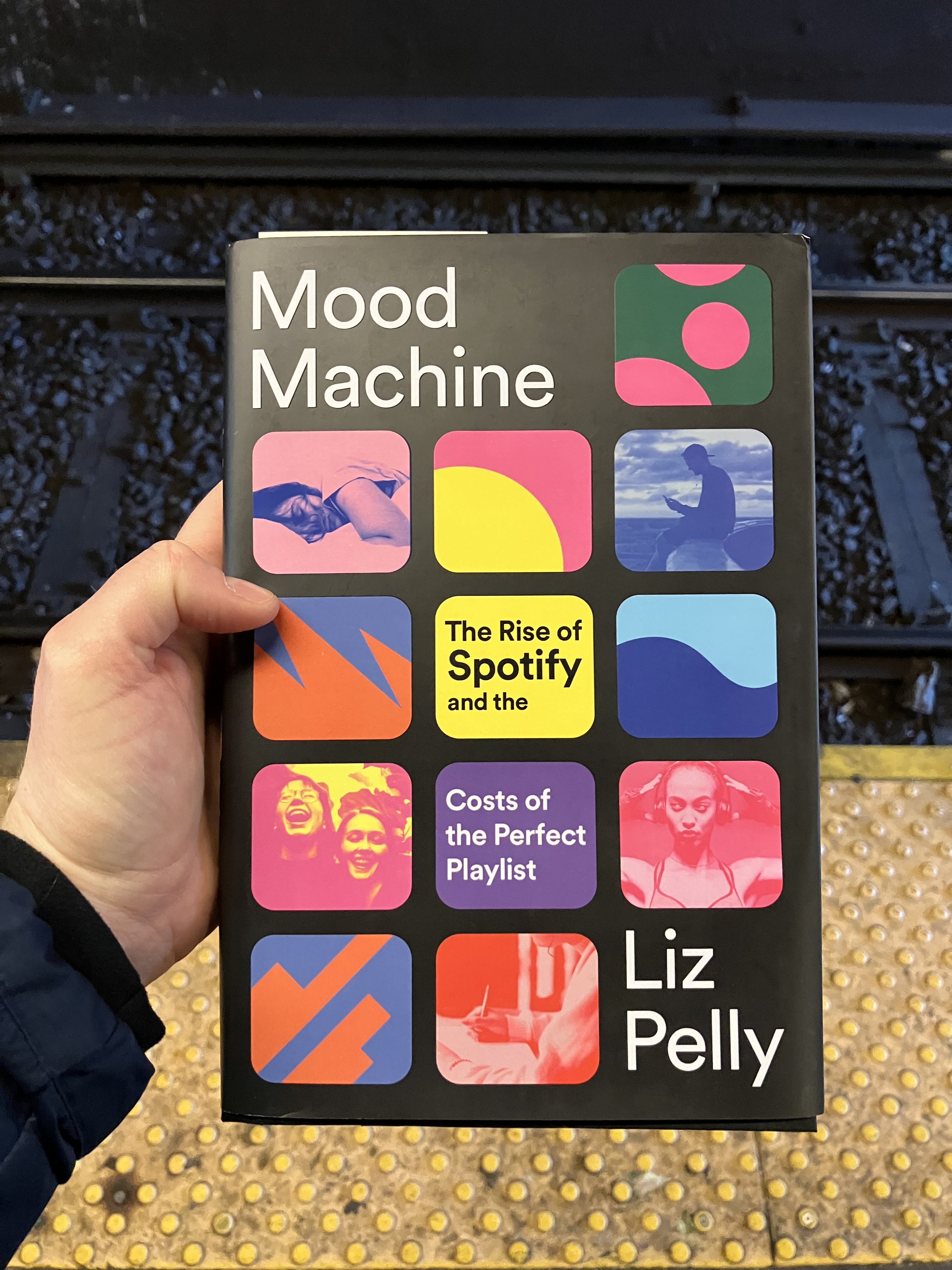
At the end, Pelly details how local librarians have started to catalog local music scenes, paying artists $200 to license their music for a certain period of time because local history includes local music. Pelly wants us to get involved in our scenes, DIY and local and what have you, and the easiest way to do this is, well, a: stop using the app and pay for the music you love, support artists; and b) “find the names of the directors and board members of your local library, and create targets campaigns” to get the people who decide where money is spent to spend money on building local libraries. (Apparently there are more local libraries in America than there are locations of McDonald’s; that does feel nice to read and type.)
Slowly figuring how to get myself off Spotify. Dug out my 2TB external hard drive of music but can’t find the power cord. Luckily my credit card was hacked last night and I have to re-set all my automatic payments when a new card comes in the mail. Maybe that will be my end with this service? I’m not sure what comes next. But it simply can’t go on like this.